
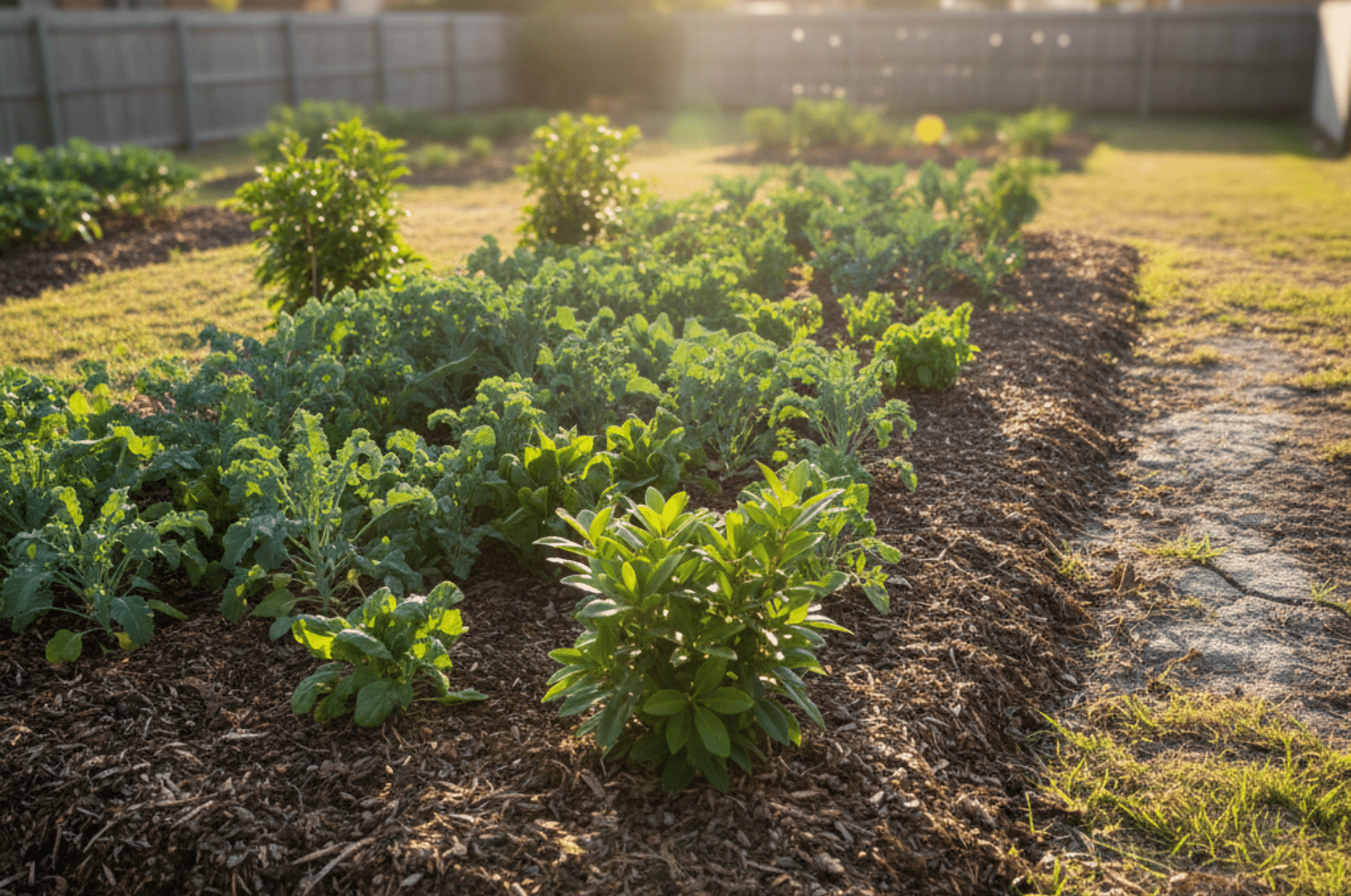
If you garden in South East Queensland, you already know summer is not gentle. One missed week of protection and your plants can go from thriving to stressed, scorched, and struggling to recover.
The brutal combo of blazing sun, hot winds, and drying soils means bare garden beds do not just dry out. They overheat. And overheated soil quietly damages roots long before leaves fully collapse.
The good news is this is fixable. And it starts with the right mulch, laid the right way, at the right time.
Why SEQ Summers Are Brutal on Bare Soil
SEQ summer sun does not just hit your plants. It slams straight into exposed soil.
Bare soil heats up fast, especially in places like Caboolture where humidity and long hot days trap warmth in the ground. Once soil temperatures spike, fine feeder roots shut down. Water evaporates before it can soak in. Beneficial soil microbes die off.
That is why gardens can fail even when you feel like you are watering enough.
Mulch changes this completely. It shades the soil surface, buffers temperature swings, and slows evaporation so moisture stays where roots can actually use it.
Mulch Is Your Garden’s Sunscreen. Here’s Why It Works
Think of mulch as sunscreen for your soil.
A proper mulch layer blocks direct sun, reduces soil temperature, and keeps moisture locked in. It also protects against surface crusting, erosion from summer storms, and stress caused by sudden heat spikes.
In SEQ conditions, mulch is not optional. It is the difference between survival and slow decline.
But not all mulches perform the same in summer. Choosing the right type matters.
Bark Mulch: The Heavy-Duty Heat Shield for Garden Beds
Bark mulch is the long-distance runner of summer protection.
Its chunky structure allows airflow while still shading the soil. It breaks down slowly, making it ideal for garden beds, trees, and feature areas where you want long-lasting coverage through the hottest months.
Bark mulch also excels at temperature regulation. It keeps soil cooler during the day and reduces heat loss overnight, helping roots stay stable.
For established gardens in Caboolture that cop full sun, bark mulch is a smart, durable choice.
Sugarcane Mulch: Fast Cooling for Veggie Patches and New Plants
Sugarcane mulch shines where speed matters.
It cools soil quickly, holds moisture well, and improves soil structure as it breaks down. That makes it perfect for veggie gardens, new plantings, and summer crops that need fast relief from heat stress.
Because it breaks down faster than bark, sugarcane mulch needs topping up more often. But for seasonal planting and soil improvement, it is hard to beat.
If you are planting in summer, sugarcane mulch can mean the difference between success and failure.
Pine Mulch: Locking in Moisture When Water Restrictions Bite
Pine mulch is a favourite during dry SEQ summers for one simple reason: moisture retention.
Its fine texture knits together to reduce evaporation, making it ideal when watering is limited or restricted. Pine mulch also suppresses weeds that compete for precious moisture.
This makes it a strong option for homeowners trying to reduce water use without sacrificing plant health.
How Thick Is Too Thick? Mulch Depth That Actually Works in Summer
More mulch is not always better.
For SEQ summer conditions, the sweet spot is usually 50 to 75mm deep for most organic mulches. This depth blocks heat while still allowing water and oxygen to reach the soil.
Too thin and the soil still overheats. Too thick and moisture can sit on the surface while roots stay dry underneath.
Always pull mulch slightly back from plant stems and tree trunks to prevent rot and pest issues.
Common Summer Mulching Mistakes That Cook Roots Instead of Saving Them
Even well-meaning gardeners make mistakes that actually make heat stress worse. Here are the most common ones we see around SEQ in summer:
- Mulching dry soil instead of watering first
- Laying mulch too thin to block heat
- Piling mulch against trunks and stems
- Using the wrong mulch for the wrong area
- Leaving bare gaps that let heat creep in
Mulch should work with water, not replace it. Always water deeply, then mulch to seal that moisture in.
When to Mulch in SEQ for Maximum Cooling (Timing Matters More Than You Think)
The best time to mulch in SEQ is before extreme heat sets in, not after plants are already stressed.
Late spring to early summer is ideal. This locks in spring moisture and prepares soil for the hottest months ahead.
That said, it is never too late to protect your soil. Even mid-summer mulching can reduce soil temperature and prevent further damage.
Get the Right Mulch, Delivered Locally in Caboolture
At Landscape City, we supply quality bark, sugarcane, and pine mulches chosen specifically for South East Queensland conditions.
From a shovel full to a full 10m³ load with free delivery across Caboolture, Elimbah, Morayfield, Burpengary, Beerburrum, Woodford, Bribie, Narangba, and Deception Bay, we make it easy to protect your garden properly.
Not sure how much you need or which mulch suits your space? Call Nick and the team for mates rates and honest advice from locals who work with these products every day.
Your garden does not have to fry this summer. Mulch it right, and let it thrive.

Leave a Comments